
A great classic cocktail depends on proportion more than complexity. For this drink, bourbon, sugar, bitters, water, ice, and citrus must work together without allowing any one ingredient to dominate. The method below produces a spirit-forward cocktail with enough sweetness and dilution to taste smooth rather than harsh, while the comparisons explain how bourbon styles, sugar types, bitters, and garnishes change the final glass.
Use the standard recipe as a starting point, then adjust deliberately. A slightly sweeter version can suit a celebration, while a drier, higher-proof pour may appeal to experienced whiskey drinkers. The most reliable results come from measuring every ingredient, stirring for the right amount of time, and tasting before adding decorative twists.
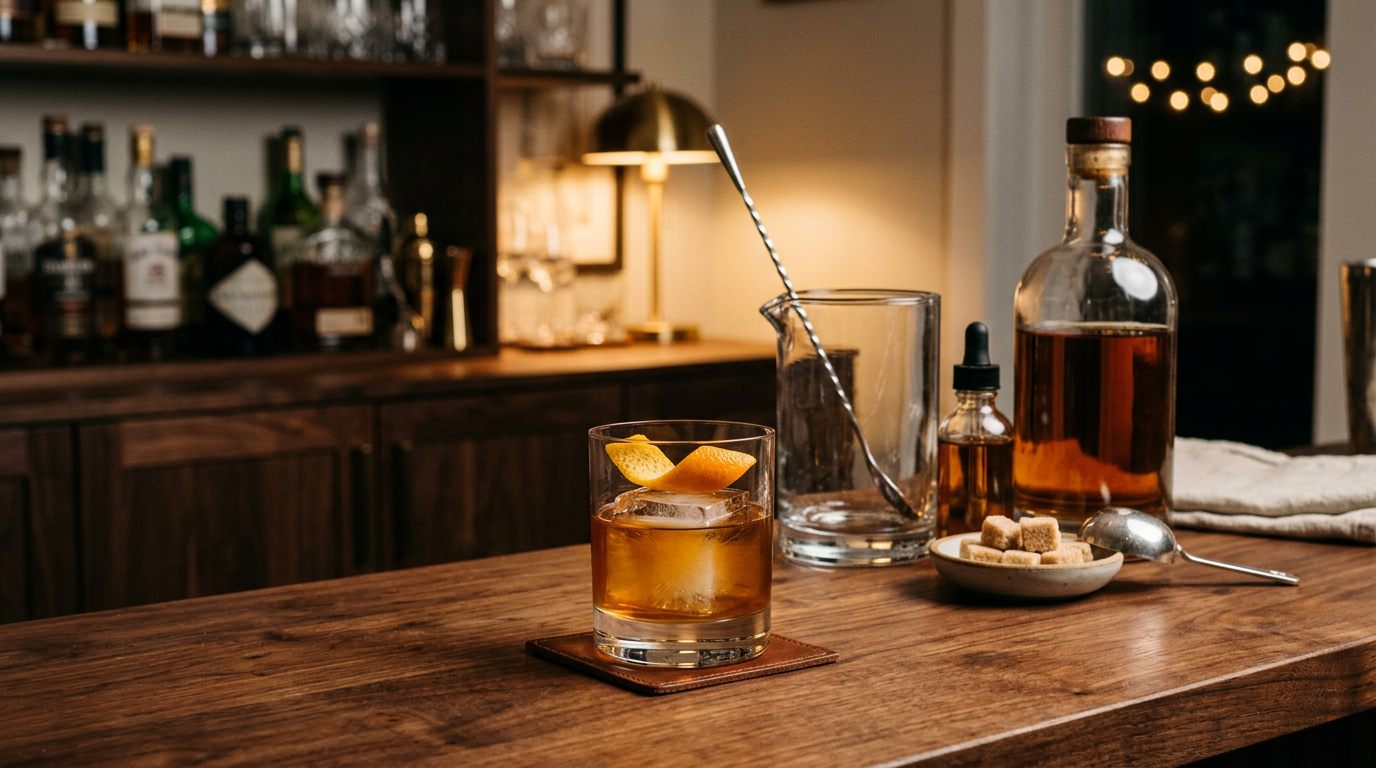
What Defines a Bourbon Old Fashioned
An Old Fashioned is a short, spirit-led cocktail built around whiskey, a small amount of sugar, aromatic bitters, and controlled dilution. Bourbon is especially well suited because its corn-based mash bill commonly brings vanilla, caramel, oak, and ripe fruit notes that complement orange and baking-spice bitters.
The classic format is not a muddled fruit salad. Orange and cherry may appear as garnishes, but the core drink should remain clear and whiskey-forward. A dependable single-serving formula is:
- 2 ounces bourbon
- 1/4 ounce rich simple syrup, or 1 teaspoon superfine sugar
- 2 dashes aromatic bitters
- One large ice cube or several dense cubes
- An expressed orange peel for aroma
This balance matters because adding more sugar cannot fix an under-diluted drink, and extra bitters cannot compensate for a bourbon that is too hot or woody.
Choose Bourbon for Flavor, Proof, and Budget
You do not need the most expensive bottle to make a polished cocktail. A bourbon in the roughly 90-105 proof range usually provides enough structure to remain noticeable after dilution without overwhelming the sweetener and bitters. Bottles around 80 proof can make a softer, lighter drink; 110 proof or higher creates more intensity but demands careful stirring and may benefit from a touch more water.
| Bourbon style | Typical effect | Best use |
|---|---|---|
| 80-90 proof | Gentle, sweet, easy-drinking | First-time drinkers or larger gatherings |
| 90-105 proof | Balanced body and oak | Most classic home recipes |
| High-rye bourbon | Peppery, dry, lively | Drinkers who want a sharper finish |
| Wheated bourbon | Round, soft, vanilla-led | A smoother, sweeter variation |
For a cocktail bottle, prioritize consistency and a flavor profile you enjoy neat. Save rare or highly allocated bourbon for sipping unless you specifically want its distinctive oak or fruit character in the drink.
Match the Sugar Type to the Texture You Want
Sweetener affects more than sweetness: it changes mouthfeel, mixing speed, and the perception of alcohol. Rich simple syrup made with two parts sugar to one part water creates a fuller texture and lets you use a small measured volume. Standard one-to-one syrup is lighter and may require slightly more.
- Rich simple syrup: Use 1/4 ounce for a concentrated, silky drink.
- Regular simple syrup: Use about 1/2 ounce, then adjust to taste.
- Demarara syrup: Adds molasses and toasted sugar notes that suit oak-forward bourbon.
- Superfine sugar: Works when stirred thoroughly, but ordinary granulated sugar may remain gritty.
- Maple syrup: Provides a woodsy twist; begin with 1 teaspoon because its flavor is pronounced.
Prepare syrup in advance, refrigerate it in a sealed container, and label the date. A plain syrup generally keeps for about two weeks when refrigerated; discard it if the aroma, color, or texture changes.
Use Bitters as a Structural Ingredient
Bitters provide concentrated spice, herb, citrus, and bark-like flavors that connect the bourbon and sweetener. Two dashes of aromatic bitters is a useful starting point, but dash size varies by bottle, so consistency improves when you measure with a dasher or bar spoon during recipe testing.
Traditional aromatic bitters deliver cinnamon, clove, and gentian-like bitterness. Orange bitters brighten the drink and can be used alongside aromatic bitters, while chocolate or walnut bitters create a richer dessert-like profile. Avoid combining several strong bitters at once until you understand their effect.
- Start with two dashes of aromatic bitters.
- Taste after dilution rather than judging the undiluted mixture.
- Add one dash of orange bitters for more citrus lift, if desired.
- Record the combination if you are preparing drinks for guests.
Buy one reliable aromatic bitters first; a specialty bottle is an optional upgrade, not a requirement for a bar-quality Old Fashioned.
Build the Cocktail with a Measured Stir
The simplest dependable technique is to stir the ingredients with ice rather than shaking them. Stirring chills the bourbon while adding controlled water and preserving a clear, polished appearance. A mixing glass is ideal for several servings, but a sturdy rocks glass works for a single drink.
- Add 1/4 ounce rich syrup and two dashes of bitters to a mixing glass.
- Pour in 2 ounces of bourbon.
- Add plenty of cold, solid ice.
- Stir smoothly for approximately 20-30 seconds, or until the outside of the glass feels cold.
- Strain over one large cube in a chilled rocks glass.
- Express an orange peel over the surface, rub it around the rim, and place it in the drink.
If the first sip tastes hot, sweet, or overly concentrated, stir for another 5-10 seconds before changing the recipe. Dilution is often the missing variable.
Control Ice and Dilution Instead of Guessing
Ice quality is a practical upgrade with a measurable payoff. Large, dense cubes melt slowly and keep the drink cold without flooding it quickly. Small or wet ice chills fast but can add water unevenly, especially if the glass is warm.
| Ice choice | Result | When to choose it |
|---|---|---|
| One large cube | Slow dilution and strong presentation | For sipping over 20-40 minutes |
| Two to three dense cubes | Faster chilling and moderate dilution | For a drink served immediately |
| Cracked or small ice | Rapid dilution | When the bourbon is high proof or too hot |
Chill the serving glass while mixing, and use fresh ice for the final pour rather than reusing ice that has already melted in the mixing glass. If you want repeatable results, weigh or measure the finished drink during testing; many stirred cocktails gain roughly 15-25% volume from water depending on stirring time and ice.
Treat the Orange Peel as Aroma, Not Just Decoration
A fresh orange peel releases aromatic oils that reach the nose before the first sip. Use a vegetable peeler or sharp paring knife to cut a strip about 2 inches long, avoiding as much thick white pith as possible. Hold the peel with the colored side facing the drink and squeeze it over the surface to express the oils.
- Use orange for the familiar citrus-and-vanilla profile.
- Try lemon for a brighter, drier impression.
- Add a brandied cherry only if you enjoy its extra sweetness.
- Use a flamed peel only after mastering the basic expression technique; it is optional and requires caution.
Do not squeeze orange juice into the standard build unless you intentionally want a different cocktail. The peel should perfume the drink while keeping the bourbon’s texture and clarity intact.
Know Which Modern Twists Improve the Original
Creative variations are most successful when they change one variable at a time. A richer syrup, a different bitters profile, or a contrasting bourbon can refresh the format without losing its identity. Multiple changes at once make it difficult to tell whether the result improved.
- Maple Old Fashioned: Replace syrup with 1 teaspoon pure maple syrup; pair with a wheated bourbon.
- Black Walnut version: Use one aromatic dash and one walnut bitters dash for a nuttier finish.
- Smoked variation: Add a subtle smoked garnish or smoked glass treatment, but avoid overpowering the whiskey.
- Split-base drink: Replace up to 1/2 ounce of bourbon with rye for extra spice.
When entertaining, serve the classic recipe first and offer variations as an optional second round. That gives guests a clear reference point and prevents an experimental garnish from becoming the only available choice.
Avoid the Mistakes That Flatten Flavor
Most disappointing home versions are not caused by a bad bottle. They come from imprecise sweetener, warm glassware, weak dilution control, or excessive garnish. Fixing technique is usually cheaper than upgrading bourbon.
- Too sweet: Reduce syrup by 1 teaspoon or increase bourbon slightly, then retaste after stirring.
- Too hot: Add 5-10 seconds of stirring before adding more sweetener.
- Too watery: Use colder, denser ice and shorten the stir.
- Gritty: Switch from dry sugar to syrup, or dissolve sugar with a teaspoon of water first.
- Flat aroma: Use a fresh peel and express it over the surface.
- Overly bitter: Return to two total dashes and avoid stacking several intense bitters.
Change only one element per test drink and write down the measurements. That simple habit is especially useful when comparing bourbon varieties or preparing a batch for guests.
Estimate the Cost of a Home Setup
A home Bourbon Old Fashioned station can be assembled gradually. The largest initial expense is the bourbon, while bitters and bar tools spread across many drinks. A bottle of 750 milliliters contains approximately 12 drinks at a 2-ounce pour, although generous pours reduce that number.
| Item | Approximate entry range | What affects value |
|---|---|---|
| Bourbon | $20-$60 per 750 ml | Proof, age statement, production scale, and scarcity |
| Bitters | $10-$25 per bottle | Brand, size, and specialty flavor |
| Sugar or syrup | $2-$15 | Household sugar versus specialty Demerara or maple |
| Mixing glass and spoon | $10-$35 | Basic barware versus weighted professional tools |
| Large ice mold | $8-$25 | Cube size, insulation, and mold quality |
For the best return, spend first on a bourbon you already enjoy, fresh bitters, and reliable ice. Premium crystal glassware is a presentation upgrade rather than a flavor requirement.
Scale the Recipe for Entertaining
For a small gathering, batching improves consistency because every guest receives the same proportions. Mix the bourbon, syrup, and bitters in a sealed bottle or pitcher, but do not add ice until serving. Pre-dilution prevents the first and last drinks from having noticeably different strength.
- For eight drinks, combine 16 ounces bourbon, 2 ounces rich syrup, and 16 dashes bitters.
- Add approximately 3-4 ounces of chilled water, starting at the lower end.
- Refrigerate the batch for several hours.
- Pour 2 1/2 ounces per drink over fresh large ice.
- Prepare orange peels in advance and keep them covered in the refrigerator.
Because dilution varies by bourbon proof and serving temperature, taste the batch before guests arrive. Keep extra chilled water and syrup available so you can correct a batch that is too strong or too dry.
Bourbon Old Fashioned FAQs
Q: Should an Old Fashioned be made with bourbon or rye?
A: Either works, but bourbon is generally rounder and sweeter, while rye is spicier and drier. Choose bourbon for the classic caramel-and-vanilla profile and rye when you want more pepper and lift.
Q: Is an orange slice traditional?
A: An expressed orange peel is the cleaner, more aromatic choice. A full orange slice adds juice and pulp, changing the drink’s texture and sweetness.
Q: Can I make this cocktail without a mixing glass?
A: Yes. Build it directly in a rocks glass, stir the syrup, bitters, bourbon, and ice with a bar spoon, then add a fresh large cube if available.
Q: How many bitters dashes should I use?
A: Begin with two dashes per 2 ounces of bourbon. Dasher bottles vary, so adjust based on flavor rather than relying on an exact drop count.
Q: What bourbon is best for beginners?
A: A smooth 80-100 proof bourbon with noticeable vanilla and caramel is usually approachable. Avoid very high-proof or heavily oaked bottles until you know you enjoy their intensity.
Your Next Step for a Better Classic Cocktail
Start with the measured base recipe, a bourbon in the 90-105 proof range, rich simple syrup, aromatic bitters, dense ice, and a fresh orange peel. Taste after stirring, then make one controlled adjustment: more dilution for heat, less syrup for sweetness, or one additional citrus-oriented bitters dash for brightness.
Once the classic is reliable, compare a high-rye and wheated bourbon side by side using identical measurements. That small tasting experiment teaches more than buying several expensive bottles at once and helps you develop a personal house recipe for weeknight sipping or entertaining.
- Measure the bourbon and sweetener.
- Use fresh ice and chill the glass.
- Stir until cold, then taste.
- Garnish with expressed citrus oils.
- Record successful variations for the next pour.